


Restaurant
A more formal place with a wide choice of dishes, an emphasis on quality and professional service. Suitable for family dinners or business meetings.
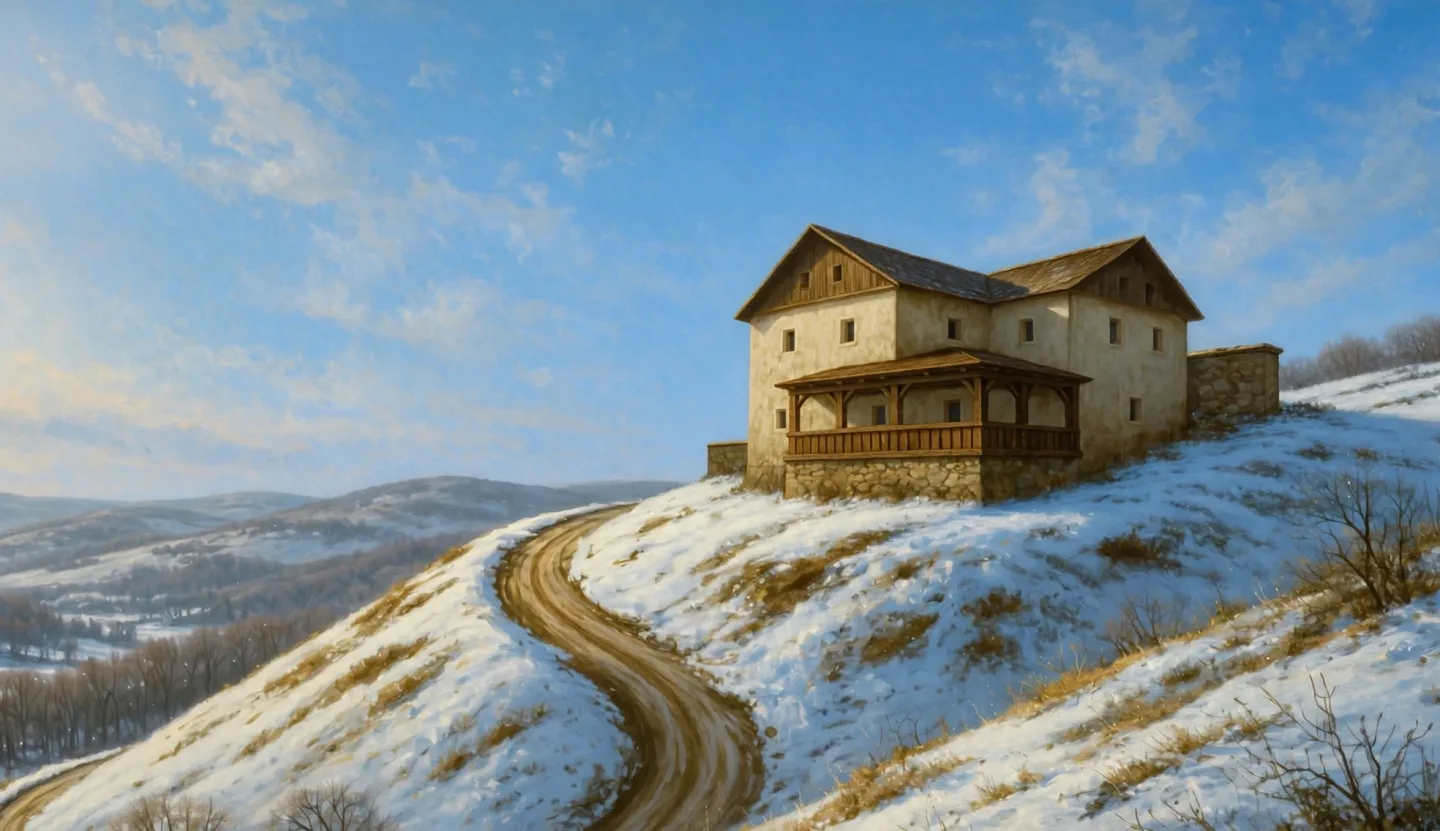
Where every stone tells its own story
The year 1268 marks the beginning of the documented story of Jaškovská krčma. For centuries it was a stop on an important trade route – a place to rest, to meet and to tell stories.
Discover mysterious passages, old legends, the characters of Jašek, the Monk and Trdlo, and the stories that have been passed down within these walls for generations.




 100 m


 Great Moravia880–907
Piast duchies990–1653
Crown of Bohemia1327–1918







 taberna


1268Judith BridgePraguers still walk across it
1342A flood sweeps the bridge away74 years after the tavern's charter
1402Charles BridgePraguers waited 134 years
1375At the King of BrabantPrague's oldest tavern still in business
How did our tavern most likely begin?
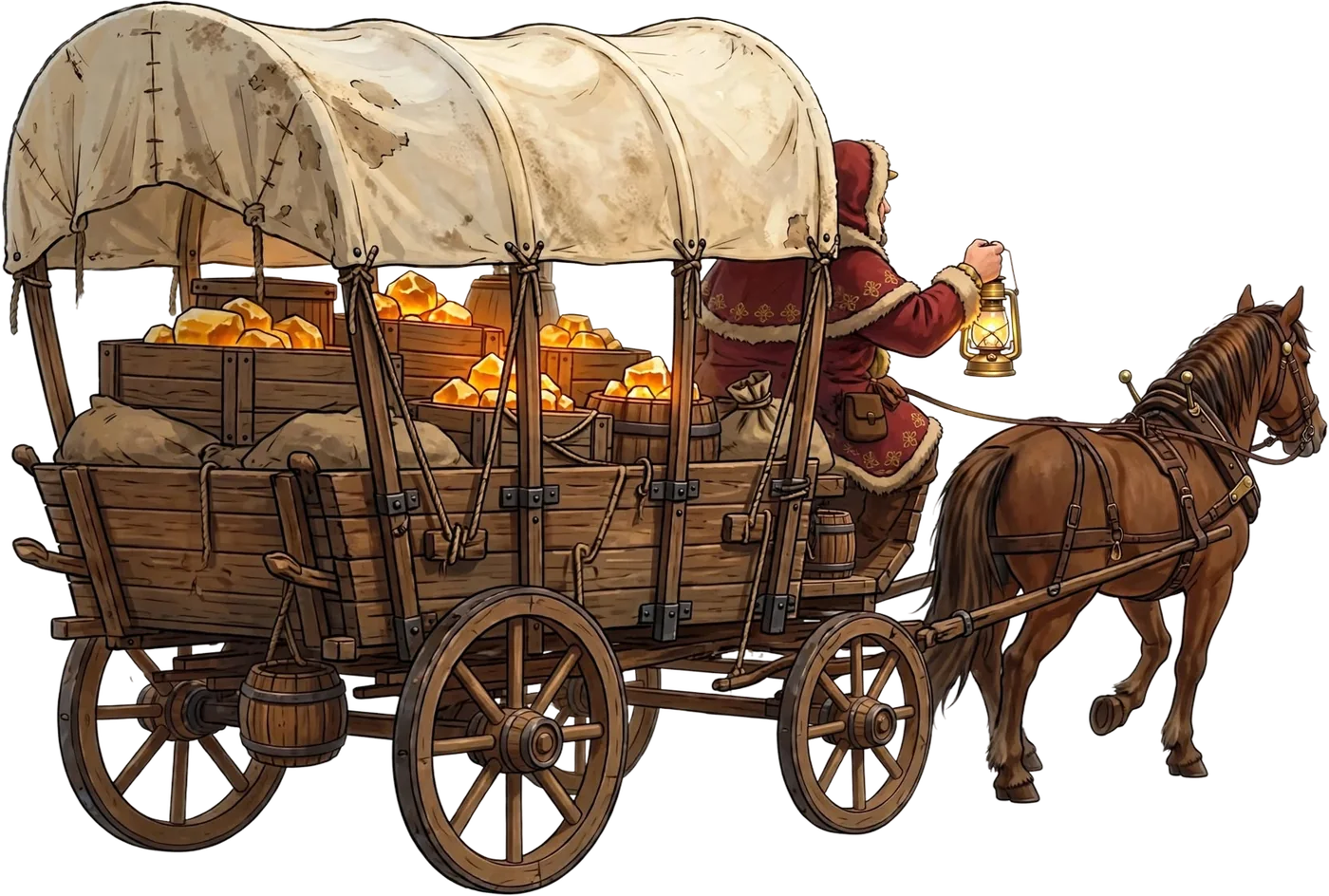
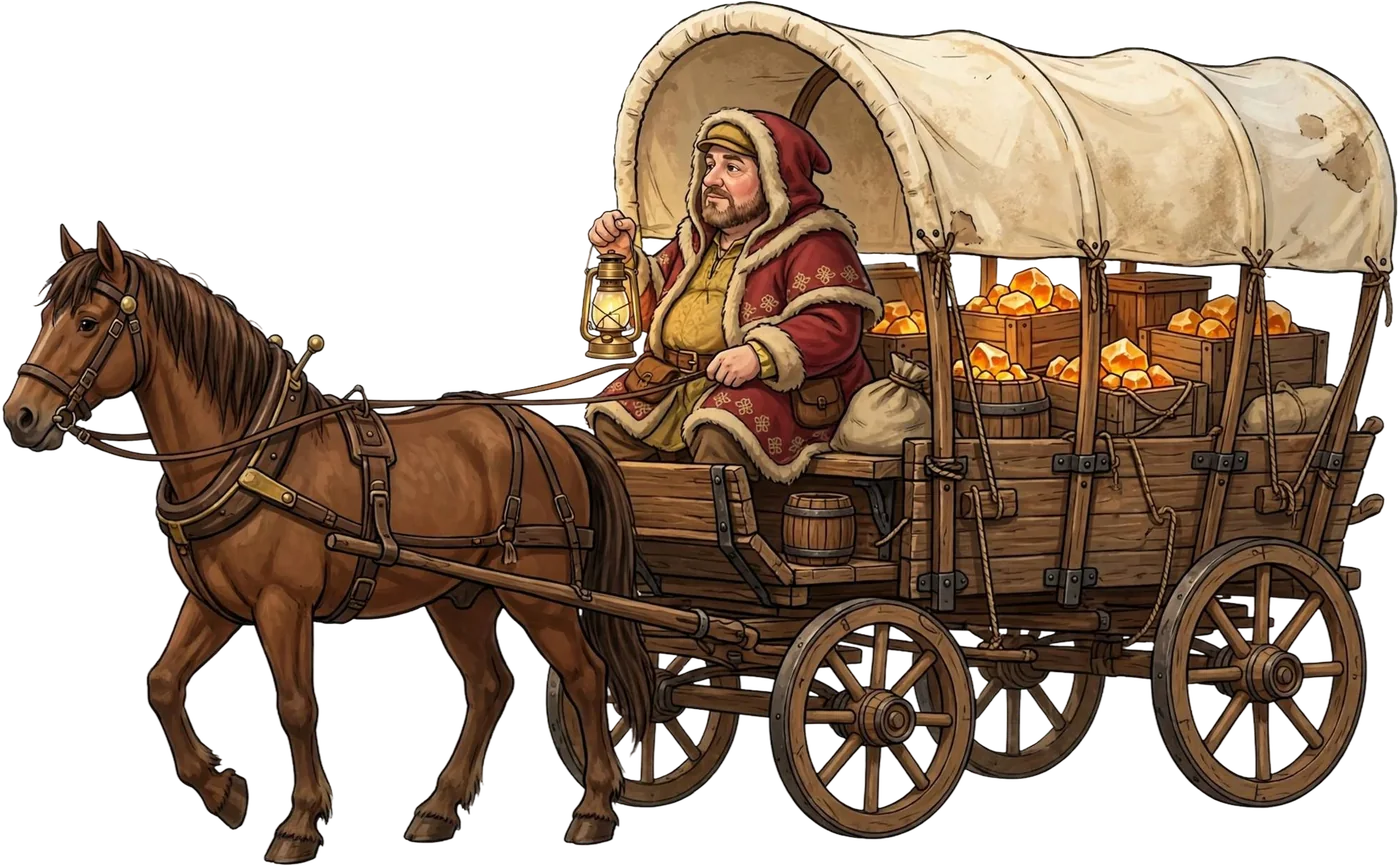
Since ancient times, even before the Roman Empire existed, there was a need to link the Baltic with the Mediterranean. This route came to be called the Amber Road, and it had several branches.
Its easternmost branch – one of the key routes linking the Danube basin with what later became Lesser Poland – had to connect the plains of today's Poland with the Moravian Gate across the western edge of the Beskids. There were hills here too, but still manageable for travellers on foot and horse-drawn carts.
Until the time of intensive settlement (roughly until the 14th century), the whole area of today's Cieszyn region was covered in dense forest. It was an impenetrable border wilderness, the so-called "přeseka", with only a handful of isolated homesteads.
The Amber Road flourished most when the Roman Empire was at its height, roughly between the 1st and 4th centuries AD. Rome craved amber; the Baltic longed for luxurious Roman goods.
But the Cieszyn uplands could not be crossed between the settled centres of the time within a single day's light.
That is why a fortified station had to be built at a strategic spot – at that time more of a merchants' refuge. A place where traders could sleep, change horses, eat and ABOVE ALL keep their precious cargo safe through the night.
A night behind a palisade in the wild forest was no luxury, but a matter of sheer survival.
That spot was most probably Jaškovec Hill (as the land was later recorded in documents), on which the tavern stands to this day.
Until the 13th century it was probably an all-timber building with a palisade, a watchtower and outbuildings.
And a proper refuge almost always had a secret escape passage.
The modern idea that secret passages belonged only to medieval castles is a myth. A large castle was built as an impregnable fortress, and any extra passage was a weak point in its defences.
A smaller fort or station, however, had to have an escape route.
In an attack, it was enough for the assailants to set the timber fortifications on fire. In buildings of wood and clay, fire was the greatest enemy,
and if the enemy cut you off and set the place alight, a stone cellar and a passage out were the only chance of saving your life.
What might the tavern have looked like then, and what does it look like today?
That today's tavern had very old predecessors is proven by tangible evidence inside it: a surviving stone portal.
It originally served as the entrance to the oldest cellar, which held a well and a connection to underground passages.
In their expert reports, historians estimated that it is older than the building itself. The historic core of today's building and a large part of the vaulted cellars were built at least a century later.
While the portal itself remembers an earlier age, the massive stone vaults in the oldest part of the building point to a further phase in the expansion of this strategic site. Written records from that time are missing, but the architectural and historical surveys speak clearly.
The geography of the place itself shows that it was originally a guard post on a hill. A hill is easier to defend.
The little river Stonávka flowed through the valley about 100 metres below the hill, yet the builders deliberately did not go down to the water, as was usual for ordinary settlements. They chose the hilltop.
And that is exactly why the old village of Těrlicko, which grew up in the valley by the river, had to give way to the waters of the Těrlicko Reservoir, while the tavern still stands safely above its surface today.
This was put to the test in the great floods of 2009. Water poured over the top of the dam, and in the tavern's cellar the groundwater rose to exactly 15 centimetres – precisely in step with the reservoir's highest level.
To understand the historical ties between Poland and the Czech lands: this region has always been a melting pot.
It belonged to Great Moravia as its first state, later to the Polish Piast duchies and to the Crown of Bohemia.
At times nobody ruled it at all, except robbers and highwaymen.
But those who gave it order, civilisation and written history were the Benedictine monks.
They colonised the land step by step, from Prague through Olomouc to the key abbey at Tyniec near Kraków, and then at Orlová.
In 1223, Duke Casimir I of Opole gave Orlová and a number of surrounding villages to the Benedictines of Tyniec near Kraków. Among them, in all likelihood, were Těrlicko and the tavern above it (as attested by the charter of Bishop Laurence for the monastery in Rybnik).
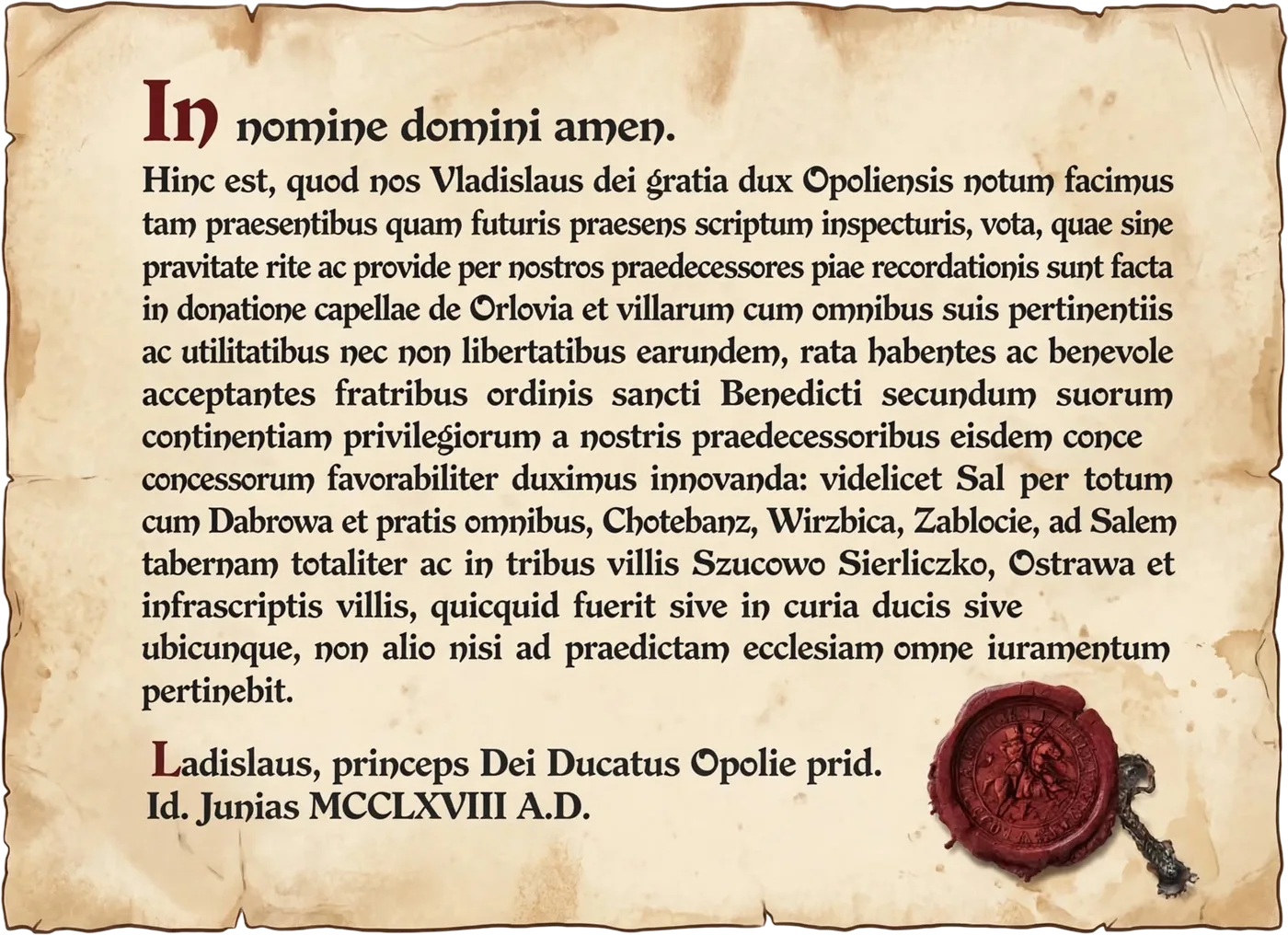
Direct written proof, however, comes only in a charter of his son, Duke Władysław I of Opole, from 1268. In it he confirms the possessions of the Orlová monastery and names our tavern explicitly (in Latin, taberna).
This precious document is kept in Kraków today, but its framed Latin transcription hangs right above the regulars' table in the tavern's taproom.
Since 1268 our history has been there in black and white.
To show just how deep this history runs: when Jaškovská krčma appears in the charter, the people of Prague are still walking across the old Judith Bridge – and will do so for another 74 years before a flood sweeps it away.
Praguers had to wait a long 134 years to stroll across today's Charles Bridge. And it took another 107 years before Prague's oldest tavern still in business, U krále Brabantského (At the King of Brabant), opened its doors.
Only in this context does one realise what an incredible weight of history Jaškovská krčma carries on its shoulders.
Its greatest value is that it has never stopped serving guests. It has survived centuries, wars, shifting borders, regimes… and even the recent Covid pandemic.
For a long time, the secret passages were spoken of only as a folk legend. Everything changed in 1954, when the chairman of the local National Committee reported that the floor had caved in right inside the tavern. The collapse revealed previously unknown underground rooms leading into two secret passages.
The first led towards the summer residence of Count Larisch (in the past, into the deep forest). Because of the risk of further collapses, it was filled in near the tavern. The second passage ran down into the valley towards the Stonávka – and its mouth now lies beneath the waters of the reservoir.
According to eyewitnesses, both passages were explored by amateurs at the time. The one leading into the valley hid a strange anomaly: in certain places its walls gave off a faint glow. The mystery was only explained scientifically after the Velvet Revolution. During the Second World War, part of the German army took an interest in underground spaces and applied a technological novelty of the time at strategic points in the passage – self-luminous phosphorescent paint (the same phenomenon was discovered, for example, in the famous Jihlava underground).
So the passages really did exist, and their origins go back to the ancient fortified station. Over the centuries, legend has it, local highwaymen were fond of using them.
They would settle into the tavern, sit conspicuously at the table and then slip unseen into the underground. They climbed out of the passage in the forest, ambushed a wealthy traveller on the road, hid the loot in the underground passages and came back through the tunnel to their half-drunk tankards. The innkeeper then received his tithe of the loot and swore to any investigators that the suspects had not set foot outside the taproom the whole time. The guards of the fort recorded no one going in or out of the fortifications either. Nobody was ever caught, so no records appeared in the lords' documents either – or are they still waiting to be discovered in the archives?...
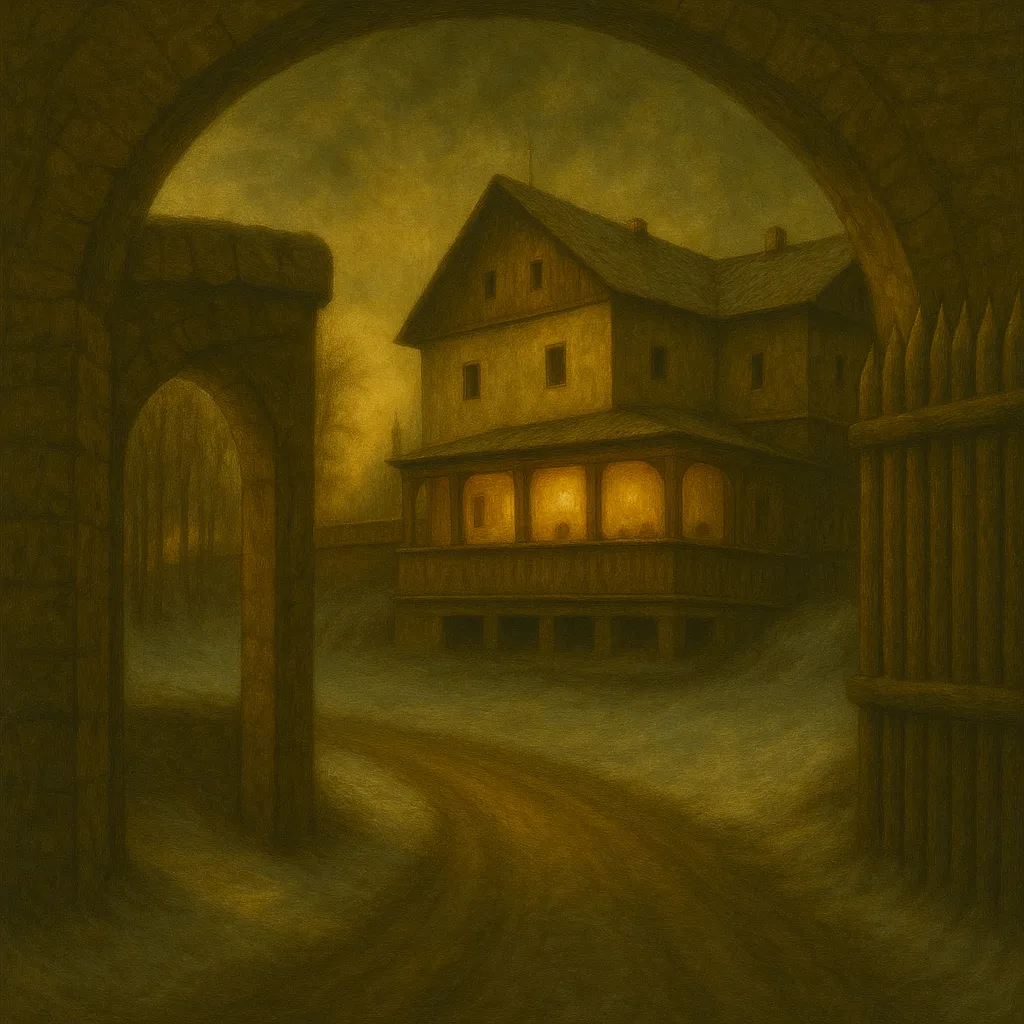
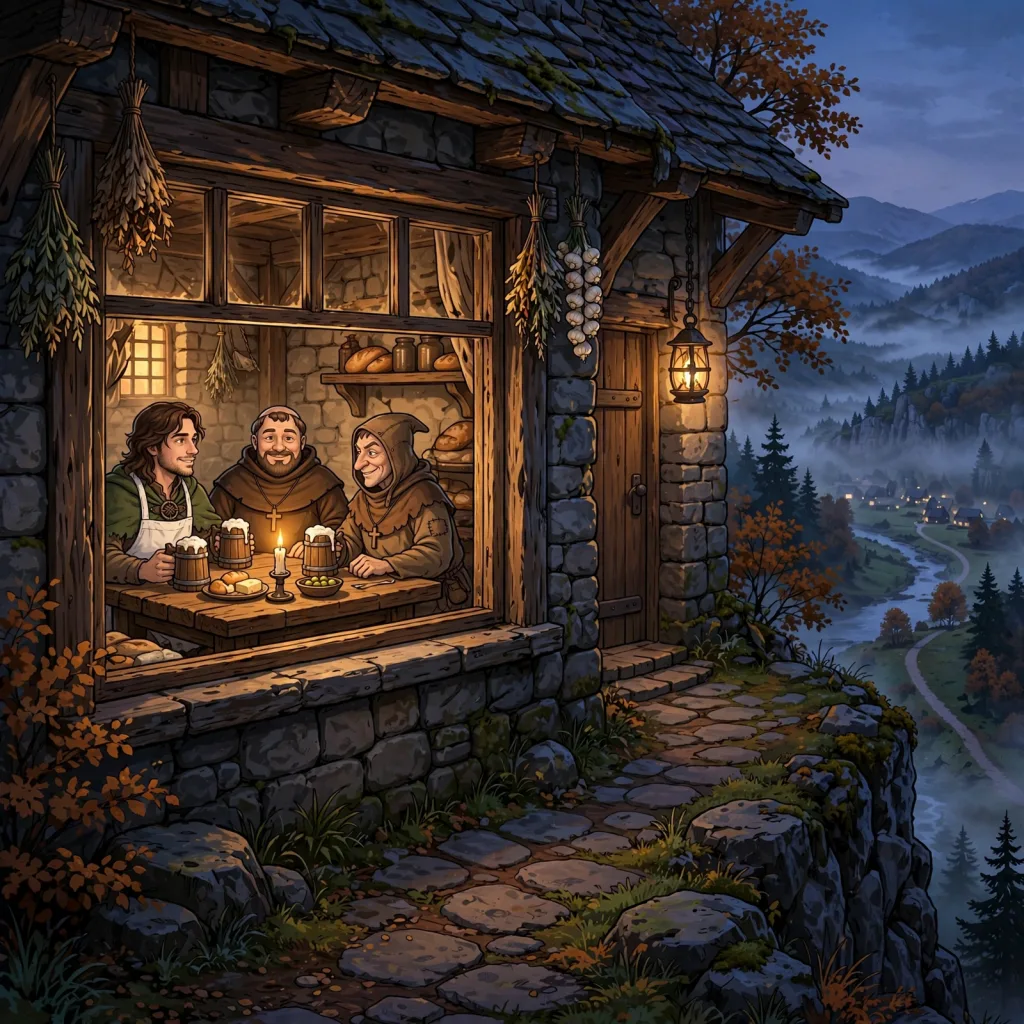
Úvod do cyklu pověstí z Jaškovské krčmy.
See what was happening in the region while the tavern passed from one owner to the next.
The Benedictine order colonised the region step by step from Prague to Orlová, which Jaškovská krčma belonged to.
970 · Prague — St George
convent of nuns at St George’s Basilica at Prague Castle
993 · Prague — Břevnov
the monks’ Břevnov Monastery
1044 · Tyniec near Kraków
monastery in Tyniec
1078 · Olomouc
monastery in Olomouc
1211 · Cieszyn
monastery in Cieszyn

1268 (12 June)
Charter of Władysław, Duke of Opole: the tavern in Těrlicko is recorded in writing here for the first time. Its existence is therefore documented from 1268, but it is probably much older.
1269 · Orlová
newly built monastery to which the order moved from Cieszyn; the tavern named in the 1268 charter belonged to it

1682
Fire: the tavern building burned down.
Taverns, inns and restaurants around the world that are still open, ranked by their documented age.


source: the internet, ChatGPT, DeepSeek…
Each of these places has its own charm and its own guests, but all of them are part of local culture and cooking. Above all, they bear witness to a long relationship between the host and the guest.
A more formal place with a wide choice of dishes, an emphasis on quality and professional service. Suitable for family dinners or business meetings.
An informal place centred on beer and simple, typically local food. Often with a friendly, lively atmosphere.
A traditional establishment with a rustic style and a historic touch, similar to a pub but with an emphasis on authenticity. Historically it served travellers and merchants.
Combines food with accommodation; typical of the countryside, with a homely and welcoming atmosphere.
If we set the criterion as the uninterrupted operation of food and drink service from its known beginning to the present day – interrupted only by rebuilding, with the building never used for any other purpose in the meantime… and with the building always tied to the same plot, parcel and house number – we consider the establishment to be "continuously operated". There is no other way. Not even Karlštejn Castle or Prague Castle looks as it did centuries ago. Every tavern or pub has had to bring in electricity and gas and alter its interior and exterior.
Guinness World Records recognises the Botín restaurant in Madrid (1725) as the oldest, but its criteria (an unchanged name, uninterrupted operation) are difficult to apply to older establishments.
Thanks to historical circumstances – it was originally a fortified stronghold on the Amber Road, which ran from the Baltic through the Moravian Gate to Vienna. Its strategic position outside the village on Jaškovec Hill (chosen for the defence of the stronghold, so no historical accident), where horses were also changed, saved it from being flooded by the Těrlicko Reservoir.
The tavern was probably founded by the Benedictines of Kraków and later owned by the Benedictines of Orlová. The first written mention dates from 1268, in a charter of Duke Władysław I of Opole.
The original underground passages served first as escape routes from the stronghold and were later used by local highwaymen. If you look around the entrance corridor or the taproom, you will see the original vaults and a stone portal about 1,000 years old (probably rebuilt from another, even older structure), which led into a two-storey cellar. The lower level gave access to a well; from the upper level you could enter 2 secret underground passages. One led down into the valley to the river Stonávka, the other into the deep forests of the time, towards today's small chateau of the Larisch family.

